REVIEW: Church Hurt, with Red Theater.

For better or worse, Religion and Theater make excellent bedfellows, don't they? On an institutional level, they value (or purport to value, anyway) community, trust, and the act of suspending one's disbelief to put faith into the unimaginable. That word faith is a slippery one, though. Implications of innate monotheistic belief have become all-too baked into the word, cutting us off from any larger sense of truth we could find in the term. There's something incredibly holy (again, not in the religious sense) about willing to commit yourself to something (or someone) through a sheer act of faith, knowing the pain that could come from seeing that faith betrayed. How much of ourselves are we earnestly willing to give to the unknown, spiritual or otherwise? That's a larger question that deserves a larger pulpit.
For those allergic to religious service, perhaps I can offer the next best thing; Brynne Frauenhoffer's world premiere play Church Hurt, directed by Jessica Love, now playing at the Edge Off Broadway as part of Red Theater's latest season. To call it one of the best plays I've seen this year might seem like a hyperbolic declaration to lob right at you so early in this review, but all I can ask is that you put some faith in me that I wouldn't bandy about such high praise so wantonly. It really is that marvelous.
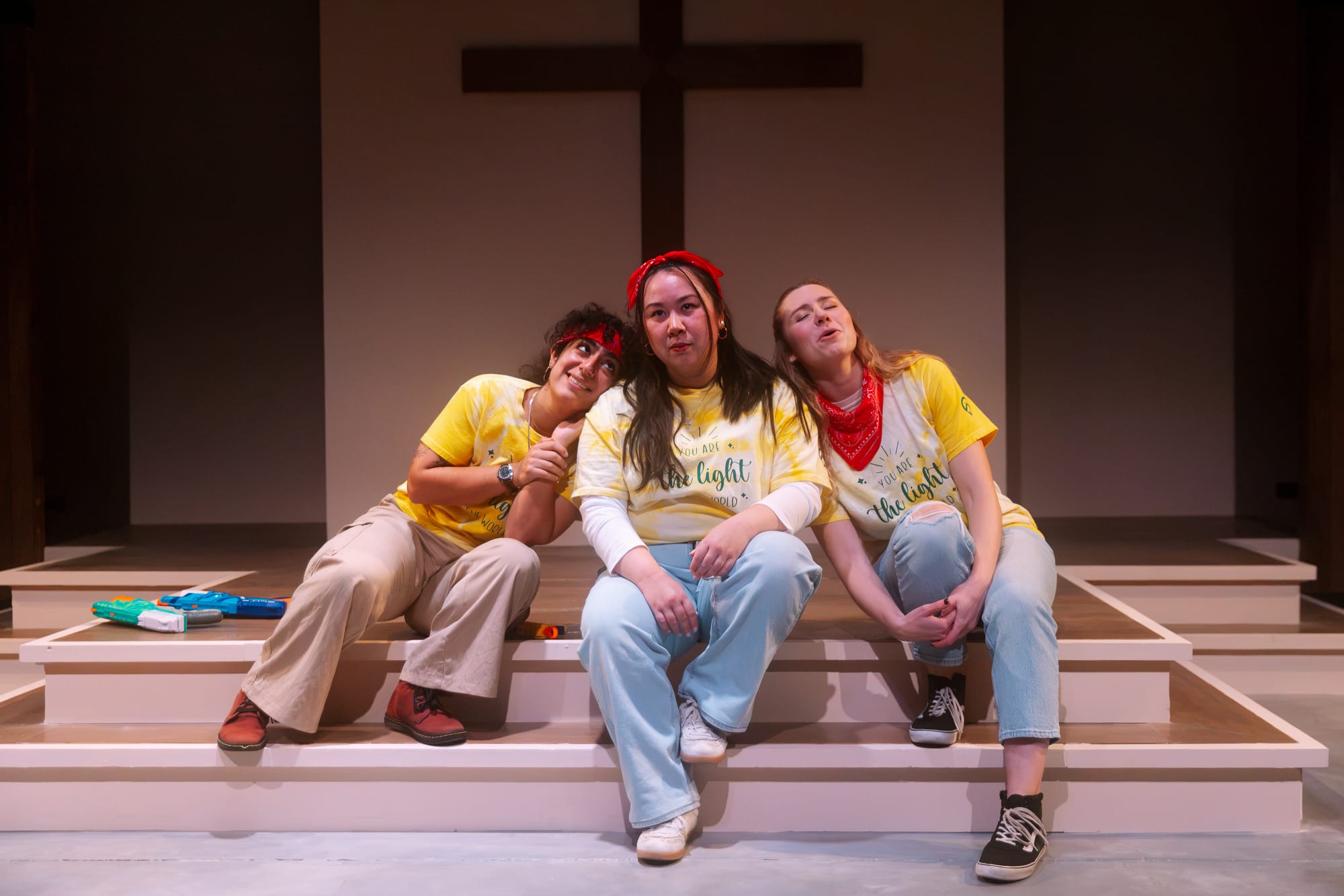
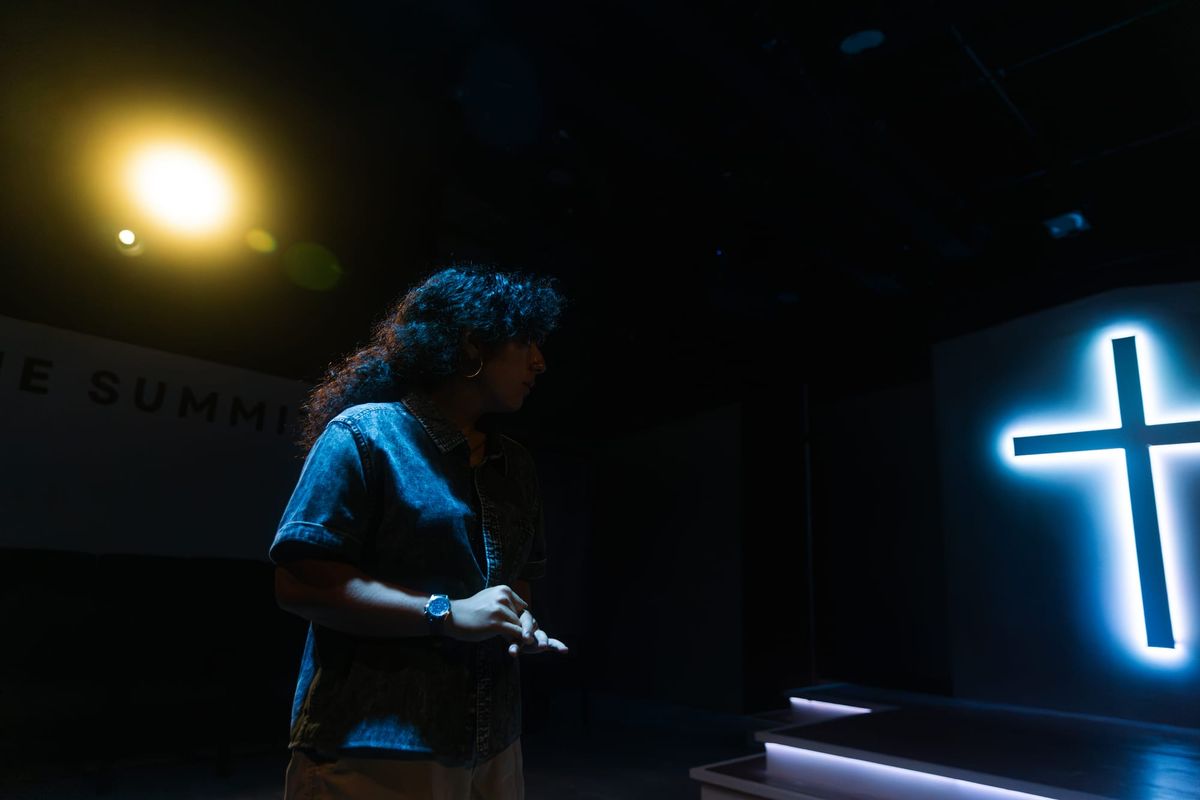
Church Hurt, staged on Rose Johnson's intimate and intentionally spare set, brings us to The Summit, a flourishing church whose modern charm attempts to make up for its retrograde ideology. The aesthetic is chic and hip (the logo is practically interchangeable with something one might see at a weed dispensary or a tech startup), but the vibes, especially when it comes to open queer identity, fall more under the "don't ask, don't tell" banner. Pained smiles are the most common expression you might come upon when conversing with the congregation, and no one knows that more than Faith (Alice Wu), a staff member at The Summit whose desire to find a romantic partner sits firmly atop her prayer list.
Thankfully, she has something of a new "pet project" to distract her; an old friend, Mar (Sara Sadjadi), who has applied for a facilities role at the church after the dual gut-punch of receiving a DUI and breaking up with her long-term girlfriend. Mar appeases the staff at The Summit by telling them she has discarded her lesbianism, taken an act of celibacy, and has become firmly committed to God and the church. As appealing as this all is to Faith, it's less so to their other childhood friend, and the final member of the play's trio, Julie (Laura Michele Erle), an out-and-proud bisexual volunteer at the church (the way Erle proclaims "I'm queer!" in an early scene brought our house down with guffaws) whose commitment to fostering the queer youth at The Summit supersedes any and all whiffs of bigotry she might feel from the congregation. The rest of the play, then, examines this trio's respective relationships with God, sexuality, and the attempt at finding a union between such intimate forces.
Frauenhoffer's script, full of dialogue that perfectly balances crude verisimilitude and poetic yearning, valiantly tackles these larger themes of queer belonging and religious trauma without ever feeling didactic or (god forbid) preachy. She lets her characters get messy and awkward and passionate, warts and all, and the twists and turns of her narrative all feel natural without feeling too predictable. There's an artful maturity to Frauenhoffer's world-building and her willingness to not give her characters any easy outs. They've made their beds built upon falsities and fear, and the play's runtime is devoted to watching them figure out how to lie in them.
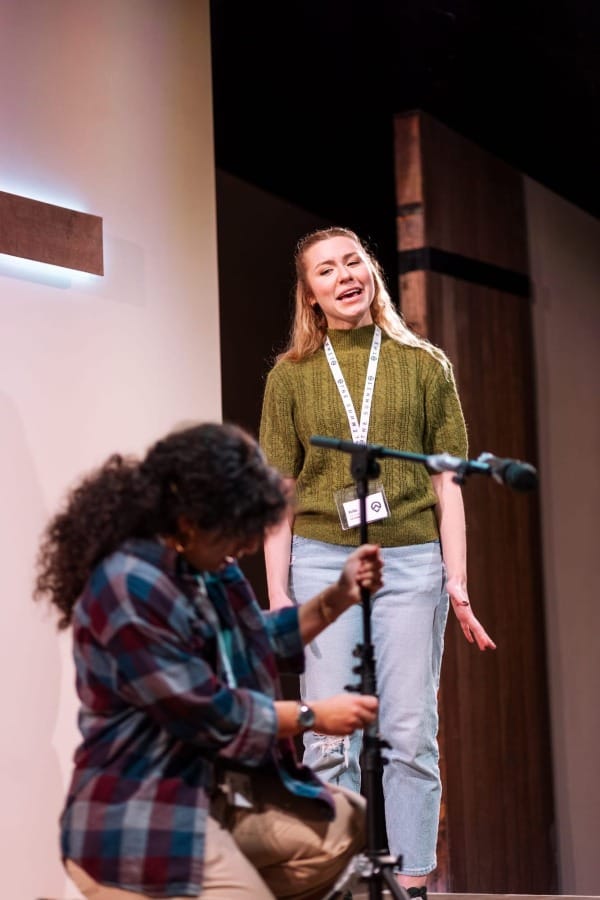
In conjunction with this level of elevated craft, Jessica Love's direction is a genuine masterclass in artful restraint, her commitment to focused minimalism in her staging giving us enough visual information to be able to live in a scene without anything else extraneous that might clutter up a moment. Aided by Amina Gilbert's subtle and striking lighting design, Love builds a world whose theatrical language and movement always feels emotionally truthful to the needs of Frauenhoffer's script. It certainly helps that all three actors here are perfectly calibrated to the rhythms and humor therein; Wu's character has perhaps the thorniest barrier of entry for audience members, but she gives us such grace and compassion that you understand her every move throughout. Erle's happy-go-lucky disposition gives us the play's most nakedly heartbreaking arc, and she navigates that journey with aplomb. But I was undeniably most taken with Sadjadi, whose character enters the play as guarded and mysterious, but whose sense of purpose and drive ends up becoming the very lifeblood of Church Hurt. Sadjadi is an actor with an exquisite command of their craft, every movement and vocalization so well attuned to the whims of their scene partners that just the way they put a lilt on a certain word in one scene brought me to tears.
When I see critics and audiences refer to a production as something that represents "classic Chicago theater," they're usually referring to a bygone era that exalted extant qualities of raging masculine histrionics, screaming families hurling insults at each other, and sweat-drenched actors at dining room tables talking about Issues. Respectfully, I think it's time to expand that definition of what is clearly a painfully limited artistic descriptor. Shows like Church Hurt are, in every way that counts, what true Chicago theater should look and feel like; intimate, raw, mature, and intentional in their building blocks of design, writing, and performance. By the time the show reaches it's heartbreaking finale, a devastating layered image of hope and helplessness, you don't have to believe in God to know you're watching something divine.
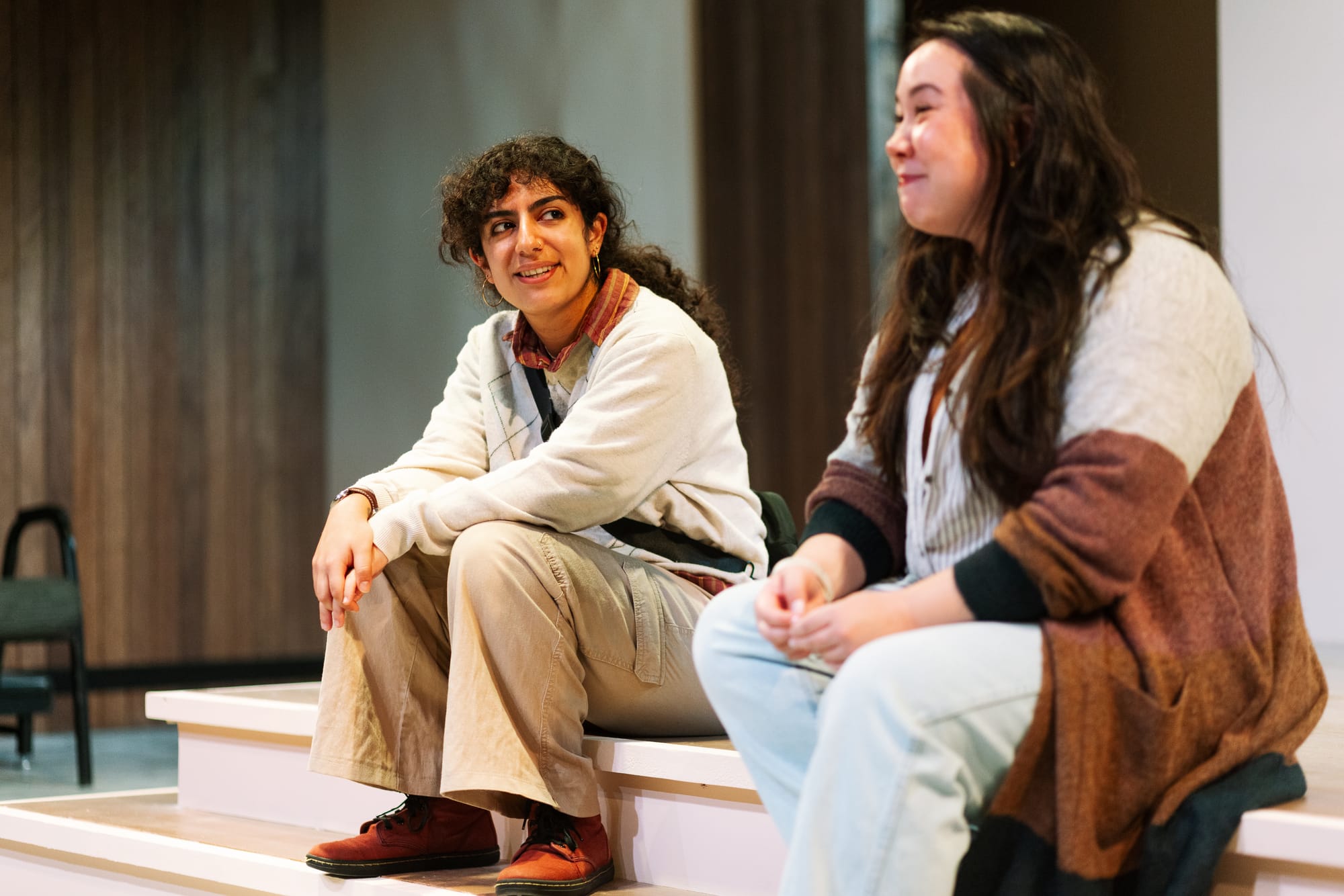
Church Hurt runs an estimated 90 minutes with no intermission, and performs at The Edge Off Broadway (1133 W Catalpa) through November 21st 2026. Tickets are available HERE.
For all press inquiries, please contact admin@benkayewords.org.